








The Deep Plane Facelift Approach: Going Beyond Skin Tightening
A deep plane facelift can help restore definition through the lower face, jawline, and neck while supporting natural-looking facial balance. For patients who feel that jowls, facial heaviness, loose neck skin, or deeper folds are changing their appearance, deep plane facelift surgery may offer a more lasting option than non-surgical treatments alone.
At Williamson Cosmetic Center, Dr. Jon Perenack is an internationally recognized facial cosmetic surgeon whose practice is devoted to facial cosmetic surgery and hair restoration surgery. His approach centers on meeting with each patient individually, understanding their goals, and recommending a facial rejuvenation plan based on their anatomy rather than a one-size-fits-all procedure.
Understanding how a deep plane facelift works, who may benefit, and what recovery involves can help patients make a more informed decision before considering facelift surgery.
What is a Deep Plane Face and Neck Lift?
A deep plane face and neck lift is an advanced facelift approach that repositions deeper facial tissues rather than focusing only on tightening the skin. By addressing the structural layers beneath the skin, this technique can help improve lower facial descent while supporting a more natural transition through the cheeks, jawline, and neck.
A deep plane facelift may help improve concerns such as:
- Jowls and lower facial heaviness
- Loss of jawline definition
- Deep folds around the mouth
- Sagging through the lower cheeks
- Loose skin or visible banding in the neck
- Fullness beneath the chin, when combined with neck contouring
Although deep plane facelift surgery is often discussed alongside neck lift surgery, not every patient needs the same combination of procedures. Therefore, treatment planning should be based on the face and neck as a whole.
How is a Deep Plane Facelift Different From a Traditional Facelift?
A traditional facelift and a deep plane facelift both address visible signs of facial aging, yet they work differently beneath the skin. A traditional facelift often focuses on lifting and tightening the skin and underlying facial layers. In contrast, a deep plane facelift involves releasing and repositioning deeper tissues that have descended over time.
As a result, a deep plane lower facelift may be especially helpful for patients with more noticeable jowling, lower facial heaviness, or loss of jawline contour. However, deep plane facelift surgery is not automatically the best choice for every patient.
The right facelift approach depends on several factors, including:
- The degree of skin laxity
- The location of facial volume loss or descent
- Jawline and neck changes
- Skin thickness and quality
- Previous facial procedures
- Whether the patient would benefit from additional surgery
Who May Be a Candidate for Deep Plane Facelift Surgery?
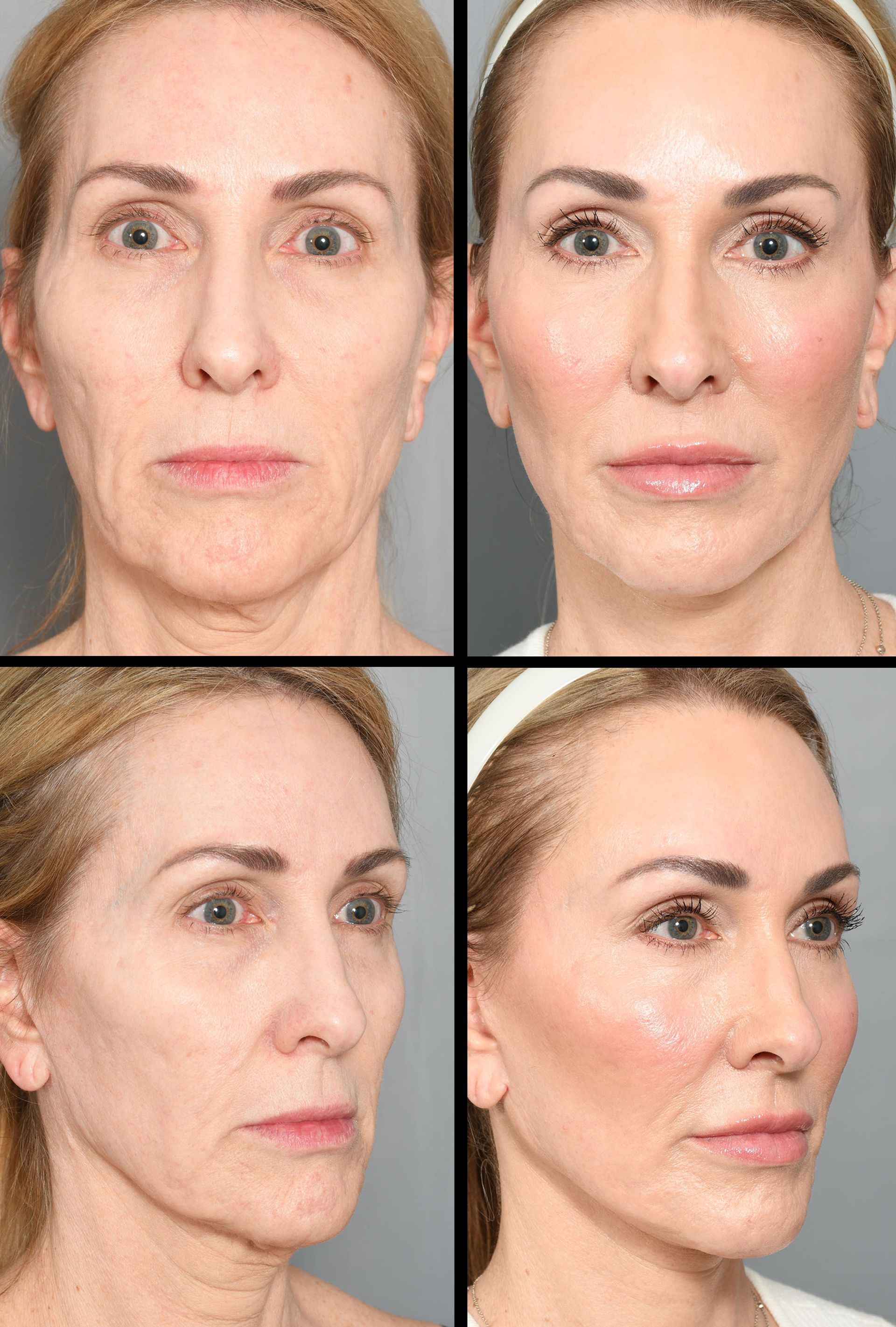
Deep plane facelift surgery may be considered for patients who have developed moderate to advanced aging changes through the lower face and neck. Many patients begin researching facelift options when injectables, laser treatments, or skin tightening procedures are no longer enough to address deeper tissue descent.
Potential candidates may notice:
- Jowls that change the contour of the jawline
- Loose or heavy skin around the lower cheeks
- Deep nasolabial folds or marionette lines
- Loss of a defined angle between the jaw and neck
- Neck skin laxity or vertical neck bands
- A tired or heavier appearance despite healthy skincare habits
Age alone does not determine candidacy. Some patients begin considering a facelift in their 40s, while others may wait until their 50s, 60s, or later. Ultimately, the right timing depends on the facial changes present and the goals of the individual patient.
Does Everyone Need a Deep Plane Lower Facelift?
No. While a deep plane lower facelift can be an effective option for certain patients, it is not necessary for everyone seeking facial rejuvenation. Some patients may be better suited for a mini facelift, a traditional facelift, a structural neck lift, or a combination approach.
For example, a patient with early jowling and mild skin laxity may benefit from a less extensive procedure. On the other hand, someone with more pronounced lower facial descent, blurring of the jawline, and neck laxity may need a more comprehensive surgical plan.
In some cases, facial rejuvenation may also include:
- Structural neck lift surgery
- Fat grafting for volume restoration
- Eyelid surgery
- Brow lift surgery
- Laser skin resurfacing
- Injectable treatments for refined contouring
Therefore, the best facelift is not necessarily the most extensive option. It is the procedure that addresses the right concerns while maintaining facial balance.

Should a Deep Plane Facelift Be Combined With a Neck Lift?
Because the face and neck often age together, many patients consider a deep plane face and neck lift at the same time. A facelift can improve the lower face and jawline, while a neck lift addresses loose skin, muscle banding, fullness under the chin, and neck contour.
Combining procedures may be helpful when a patient has both jowls and visible neck aging. In addition, treating the lower face and neck together can create a more cohesive result from the jawline downward.
However, the decision depends on the anatomy of the neck, skin quality, and the amount of correction needed. A consultation can help determine whether a deep plane facelift alone or a combined face and neck lift is more appropriate.
What Does Deep Plane Facelift Recovery Look Like?
Recovery is one of the most researched parts of deep plane facelift surgery. Although many patients focus on before and after results, it is equally important to understand that swelling, bruising, tightness, and numbness can take time to improve.
Typical recovery milestones may include:
- First week: Swelling, bruising, tightness, and fatigue are common. Patients often need rest and help with regular activities.
- Around two weeks: Many patients feel more comfortable being seen socially, although swelling and bruising may still be visible.
- One month: Facial contours continue to improve, yet subtle swelling or numbness may remain.
- Several months: The face and neck continue to settle as healing progresses and results become more refined.
Recovery can vary depending on whether the facelift is combined with a neck lift, eyelid surgery, fat grafting, or other procedures. Consequently, patients should plan for healing time and follow their postoperative instructions closely.
How Much Is a Deep Plane Facelift?
Pricing for deep plane facelift surgery varies because every surgical plan is based on the patient’s anatomy, goals, and whether other procedures are recommended. The overall investment may reflect the complexity of the facelift, Dr. Jon Perenack’s surgical expertise, anesthesia and facility fees, and any additional treatments included in the plan.
Cost may also be influenced by:
- Whether a neck lift is performed
- The amount of facial and neck correction needed
- Whether fat grafting or eyelid surgery is added
- Surgical facility and anesthesia requirements
- Postoperative care and follow-up visits
A consultation is the best way to receive details about the recommended treatment plan and the expected investment for deep plane facelift surgery.
Dr. Jon Perenack for Your Facelift
Dr. Jon Perenack is an internationally recognized facial cosmetic surgeon in Baton Rouge with a focused practice in facial cosmetic surgery. He is a Diplomate of the American Board of Cosmetic Surgery in Facial Cosmetic Surgery and a Diplomate of the American Board of Oral and Maxillofacial Surgery. His background supports a detailed understanding of facial structure, balance, and the surgical techniques used to address concerns involving the face, jawline, and neck.
Explore Your Facelift Options at Williamson Cosmetic Center
A deep plane facelift can be an effective option for patients with jowls, lower facial laxity, reduced jawline definition, or visible neck aging. However, the most appropriate approach may involve a deep plane facelift, a traditional facelift, a mini facelift, a structural neck lift, or a combination of procedures, depending on the areas that need correction.
At Williamson Cosmetic Center, patients from Baton Rouge, Gonzales, Lake Charles, and surrounding communities can meet with Dr. Jon Perenack to discuss their concerns and explore the surgical approach that best supports natural-looking facial rejuvenation.
Williamson Cosmetic Center Blog