










Deep Plane Facelift Surgery in Baton Rouge, LA
A Structural Approach to Facial Rejuvenation With Dr. Jon Perenack
Facelift surgery can help improve jowls, sagging skin, and loss of jawline definition for a more refreshed, natural-looking appearance.
Dr. Jon Perenack, an internationally recognized lecturer, author, and surgeon in the area of facial cosmetic surgery, helps patients at the Williamson Cosmetic Center explore options in facelifts: deep plane facelift and structural neck lift options based on their goals.
What is a Facelift?
A facelift is a surgical procedure that improves visible signs of aging in the lower face, jawline, and, often, the upper neck. It is designed to address concerns such as jowls, sagging skin, loose facial tissue, and reduced jawline definition. Depending on facial anatomy and aesthetic goals, Dr. Jon Perenack may recommend a deep plane facelift, a more traditional facelift, a structural neck lift, or a combined surgical approach.
Unlike treatments that only improve the surface of the skin, a facelift addresses deeper facial support and involves muscle balancing, fat contouring, and tightening skin laxity. As a result, it can create more noticeable and longer-lasting improvement for patients who want surgical facial rejuvenation.
What Can a Facelift Improve?
A facelift can improve several common signs of facial aging, especially in the lower face and jawline. Many patients begin considering facelift surgery when they notice that their facial contours no longer reflect how youthful or energetic they feel.
A facelift may help improve:
- Jowls along the jawline
- Sagging skin in the lower face
- Loss of jawline definition
- Midface elevation
- Loose skin near the upper neck
- Facial laxity caused by aging
- A tired or aged lower face appearance
- Softening between the face and neck

In many cases, facelift surgery is not about changing your face. Instead, it is about restoring a cleaner definition, improving facial balance, and helping the lower face and neck look more refreshed.
Facelift Before and After Results

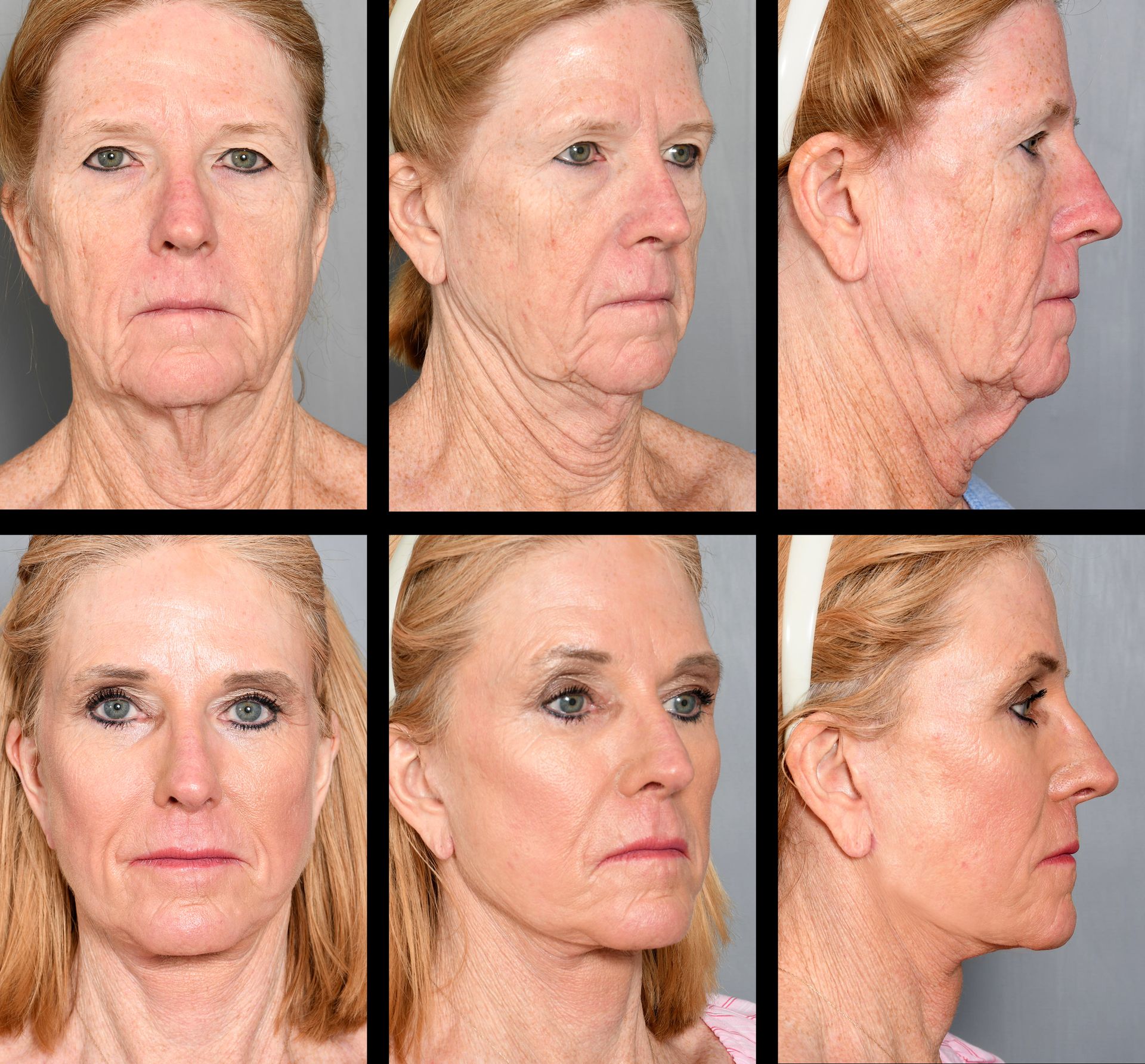

Types of Facelift Procedures
Not every patient needs the same type of facelift. Dr. Perenack believes that the best surgical plan depends on skin quality, facial structure, aging pattern, and the degree of correction desired.
Deep Plane Facelift
The deep plane facelift is Dr. Perenack’s signature facelift technique that addresses deeper facial support structures from the midface to the jawline to the clavicles. Rather than focusing only on tightening the skin or limited SMAS elevation, this approach repositions the deeper facial tissues to improve laxity, extending from the midface down to the jowls, naturally and predictably improving the contour of the entire face from the cheeks down. The deep plane facelift also always includes tightening of the neck with an accompanying structural necklift.
Incisions are placed both in front of and behind the ears, with another incision under the chin. The deeper planes are lifted and tightened, with liposculpture performed as needed. Excess skin is removed, and the incisions closed. While drains are rarely used, a wrap around the head is placed for gentle compression for about 7 to 10 days.
A deep plane facelift may be appropriate for patients with more advanced signs of aging or those who need more comprehensive lower face rejuvenation. However, it is not the right choice for every patient. The best option depends on the amount of tissue descent, skin laxity, facial anatomy, and desired level of correction.
Traditional Facelift
A traditional facelift, sometimes called a “SMAS lift,” may be recommended for patients with laxity of the lower face and neck, but who also have a history of previous surgery or trauma that may have significantly altered facial anatomy, making the deep plane lift less ideal. This approach can improve the jawline and lower face while helping create a more rested appearance.
Similar to the deep plane lift, a traditional SMAS lift is always combined with a structural neck lift.
Mini Facelift
A mini facelift is a more focused surgical approach that can improve early signs of aging in the lower face and jawline. It has some effect on mild laxity just beneath the chin and no effect on loose skin of the lower neck. It may be appropriate for patients with mild jowling, early skin laxity, or subtle loss of facial definition. Incisions are placed in front of the ears, and the SMAS is tightened using a suture technique. Liposuction is performed as necessary, excess skin is removed, and incisions closed.
Mini facelift recovery may be shorter for some patients, especially when the surgical plan is more limited. Even so, healing varies, and patients should follow their post-operative instructions closely for the best recovery experience.
Mini Facelift vs Deep Plane Facelift
A mini facelift is often used for earlier lower face aging, while a deep plane facelift may be recommended for more advanced sagging and deeper tissue descent. A mini facelift typically focuses on mild jowling and early jawline changes. In contrast, a deep plane facelift addresses deeper facial support structures for a more comprehensive lift throughout the face and entire neck.
Neither option is automatically better. Instead, the best choice depends on how much correction is needed, where aging is most visible, and how the facial tissues have changed over time.
Deep Plane Facelift and Structural Neck Lift: Do You Need One or Both?
Some patients benefit from a facelift, while others may need a structural neck lift or a combined approach. A facelift focuses on the lower face, jowls, and jawline, while a structural neck lift addresses loose neck skin, muscle banding, fullness beneath the chin, and loss of neck definition.
Because the face and neck often age together, combining these procedures can create a more balanced transition from the jawline to the neck. During a consultation, Dr. Jon Perenack can determine whether a facelift, structural neck lift, or combined surgical plan is the best fit for your anatomy and goals.
Who Is a Good Candidate for Facelift Surgery?
A good candidate for facelift surgery is usually someone with visible lower face aging, jowls, sagging skin, jawline changes, or neck laxity. Candidates should be in good overall health, have realistic expectations, and want improvement that cannot be fully achieved with non-surgical treatments.
Age alone does not determine candidacy. Some patients may benefit from a mini facelift when early jowls begin to appear, while others may be better suited for a deep plane facelift when deeper tissue descent and more advanced sagging are present.
Facelift Recovery Timeline
Facelift recovery varies based on the procedure performed, the extent of correction, and the patient’s natural healing process. In general, patients can expect swelling, bruising, tightness, and tenderness during the early recovery period.
Many patients plan for one to two weeks of social downtime after facelift surgery. Over the following weeks and months, swelling continues to improve, and the final result becomes more refined.
How Much Does a Facelift Cost?
Facelift cost depends on the surgical technique, anesthesia, facility fees, and procedure complexity.
For patients researching the cost of deep plane facelift surgery in Baton Rouge, the most accurate estimate comes from an in-person consultation. This allows Dr. Perenack to evaluate facial anatomy, skin laxity, goals, and whether additional procedures may be recommended. Dr. Perenack is a specialist, solely performing facial cosmetic surgery for over 25 years, and is an internationally recognized lecturer, author, and innovator in this field.
Why Choose Dr. Jon Perenack for Facelift Surgery?
Dr. Jon Perenack, at the Williamson Cosmetic Center, offers facial cosmetic surgery and aesthetic care for patients seeking thoughtful, natural-looking facial rejuvenation. Dr. Perenack and his team help patients understand the differences between deep plane facelift, facelift, structural neck lift, and other facial rejuvenative options so they can make a confident decision.
With locations in Baton Rouge, Gonzales, and Lake Charles, Williamson Cosmetic Center serves patients throughout Louisiana who want expert guidance, clear communication, and a surgical plan based on their individual anatomy and goals.
Your result is our reputation.
What to Expect During Your Facelift Consultation
Your facelift consultation is a friendly and supportive experience designed to help you find the best approach for your unique anatomy, concerns, and aesthetic goals. Dr. Jon Perenack will gently evaluate your facial structure, skin laxity, and degree of aging, discuss options such as facelift, mini facelift, deep plane facelift, and neck lift, and work with you to create a personalized treatment plan.
You'll have a welcoming opportunity to review before-and-after photos of similar patients, ask any questions you have, and gain a clear and comfortable understanding of the procedure, recovery process, and expected results.
Facelift FAQs
What Should I Look for in a Facelift Surgeon?
A facelift surgeon should have strong experience with facial anatomy, surgical planning, and natural-looking facial rejuvenation. Dr. Perenack believes that a surgeon focusing on only the face is an excellent place to start. Patients should review before and after photos, ask about the surgeon’s approach, and look for clear communication during the consultation. It is also important to choose a team that explains whether a mini facelift, facelift, deep plane facelift, neck lift, or another option is the best fit. Board certification, hospital privileges, and facilities are also important factors. Ultimately, the surgeon who you feel most comfortable with based on all of the above is the right fit for you.
Will People Be Able to Tell I Had a Facelift?
A well-planned facelift should help the face look refreshed and more defined without making the result look obvious. The goal is to improve sagging skin, jowls, jawline changes, and lower face aging while preserving the patient’s natural facial character. When the procedure is planned carefully, others may notice that the patient looks rested rather than surgically changed.
Is a Deep Plane Facelift Worth It?
A deep plane facelift is the gold standard for rejuvenating the mid and lower face and neck. This technique addresses deeper facial support structures, offering more comprehensive improvement for the right candidate. However, not every patient needs this level of correction, so the best choice should be based on anatomy and goals.
Who Is a Good Candidate for a Deep Plane Facelift?
A good candidate for a deep plane facelift may have more noticeable jowls, lower face sagging, deeper tissue descent, or laxity that affects both the face and neck. This approach may be recommended when a more limited procedure is unlikely to create the desired correction. During a consultation, candidacy is determined by facial structure, skin quality, aging pattern, and overall health.
Do I Need a Mini Facelift, a Neck Lift, or the Deep Plane Lift?
Some patients need only a neck lift due to laxity only being present below the jawline. For Patients with mild facial laxity, a mini facelift is indicated. For patients with both sagging neck and face, a deep plane lift is the correct option. When aging affects both face and neck areas, combining the procedures creates a more balanced and complete result.
How Much Does a Facelift Cost in Baton Rouge?
The cost of a deep plane facelift in Baton Rouge depends on the surgical approach, anesthesia, facility fees, whether a neck lift is included, and the complexity of the procedure. Mini facelift cost may be different from deep plane facelift cost because the level of correction and surgical planning can vary. The most accurate way to understand pricing is to schedule a consultation and receive a recommendation based on your anatomy and goals.
Is a Mini Facelift Enough for Early Jowls?
A mini facelift may be enough for early jowls when skin laxity is mild, and the patient mainly wants subtle jawline improvement. However, if jowling is more advanced or the neck is also involved, a more complete deep plane facelift may be recommended. The right approach depends on the degree of sagging and the patient’s desired result.
Am I Too Old for a Facelift?
A patient is not automatically too old for a facelift based on age alone. Candidacy depends more on overall health, skin quality, anatomy, healing ability, and personal goals. Many patients in their 60s and beyond can still be candidates for facelift surgery if they are medically appropriate and have realistic expectations.
What Is the Difference Between a Mini Facelift and a Deep Plane Facelift?
A mini facelift is generally a more limited procedure used for earlier lower face aging, mild jowls, and subtle jawline changes. A deep plane facelift is a more advanced technique that repositions deeper facial tissues and may be recommended for more significant sagging or lower face descent. The deep plane facelift also completely addresses sagging in the neck. The best option depends on how much correction is needed and where aging is most visible.
Schedule a Facelift Consultation in Louisiana
Choosing the right facelift approach starts with a clear understanding of your facial anatomy, concerns, and goals. At Williamson Cosmetic Center, Dr. Jon Perenack and his surgical team help patients explore facelift, deep plane facelift, and neck lift options.
Your result is our reputation.
Schedule a facelift consultation with Dr. Jon Perenack at Williamson Cosmetic Center to learn which approach may be right for you.